
The role of regional manufacturing hubs in scaling exports
As India moves towards its ambition of becoming a global textile powerhouse, these hubs will play a defining role in shaping the country’s export trajectory, says Suketu Shah.
India’s textile and manufacturing sector is emerging as one of the fastest-growing and most employment-intensive industries globally. The textile sector alone employs over 45 million people and contributes around 2.3 per cent to India’s GDP, underlining its critical role in the economy. With the industry projected to scale to $350 billion, growth is being driven by policy support such as Make in India, the PLI (Production Linked Incentive) scheme, and evolving global supply chains.
India’s textile industry is now at a defining moment. As sourcing strategies diversify beyond traditional markets, the country is strengthening its position as a reliable and scalable textile exporter, with exports already exceeding $36 billion annually. In this transition, regional manufacturing hubs are emerging as key enablers, driving efficiency, innovation, and export competitiveness across the value chain.
The rise of regional powerhouses
Regional textile manufacturing clusters are central to India’s ambition of increasing textile exports to $100 billion by 2030. The competitive edge of the Indian textile sector has long been linked to its geography. Whether it is the knitwear industry of Tirupur, the synthetic textile base of Surat, or the denim and cotton ecosystem of Ahmedabad, these clusters have evolved into specialised manufacturing centres.
These specialised clusters account for a significant share of the country’s textile production, improving competitiveness through more efficient production systems. They benefit from shared infrastructure, access to skilled labour, and deep-rooted supplier ecosystems, which collectively enhance productivity and reduce operational inefficiencies.
Over time, these hubs have moved beyond traditional strengths to adopt modern manufacturing practices, digital tools, and export-oriented processes. This evolution is enabling them to compete not just on cost but also on quality, consistency, and speed, which are increasingly critical in global trade.
Driving export competitiveness
Regional manufacturing hubs play a crucial role in export competitiveness by enhancing supply chain efficiency, reducing operational costs, and fostering innovation through industry clustering.
These hubs create tightly integrated ecosystems where spinning, weaving, processing, and garmenting units operate in close proximity. This reduces lead times, lowers logistics costs, and improves coordination across the value chain. In a global market where speed-to-market is a key differentiator, such efficiencies provide Indian exporters with a significant advantage.
Proximity to ports, improved logistics infrastructure, and government-supported industrial corridors are further strengthening the export readiness of these clusters. The development of plug-and-play infrastructure under initiatives such as PM MITRA parks is expected to enhance this advantage by providing end-to-end integration, from fibre to finished products.
Clusters also enable standardisation and scalability, allowing manufacturers to meet large international orders while maintaining consistent quality. This is increasingly important as global buyers look for partners who can deliver both scale and reliability.
The shift toward MMF and value-added textiles

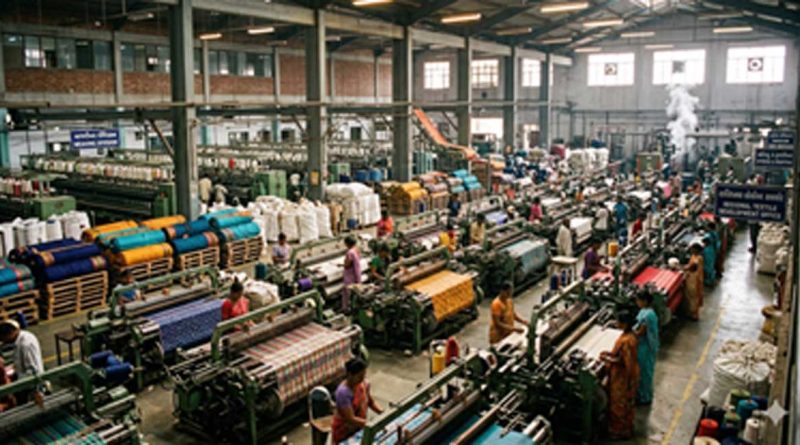
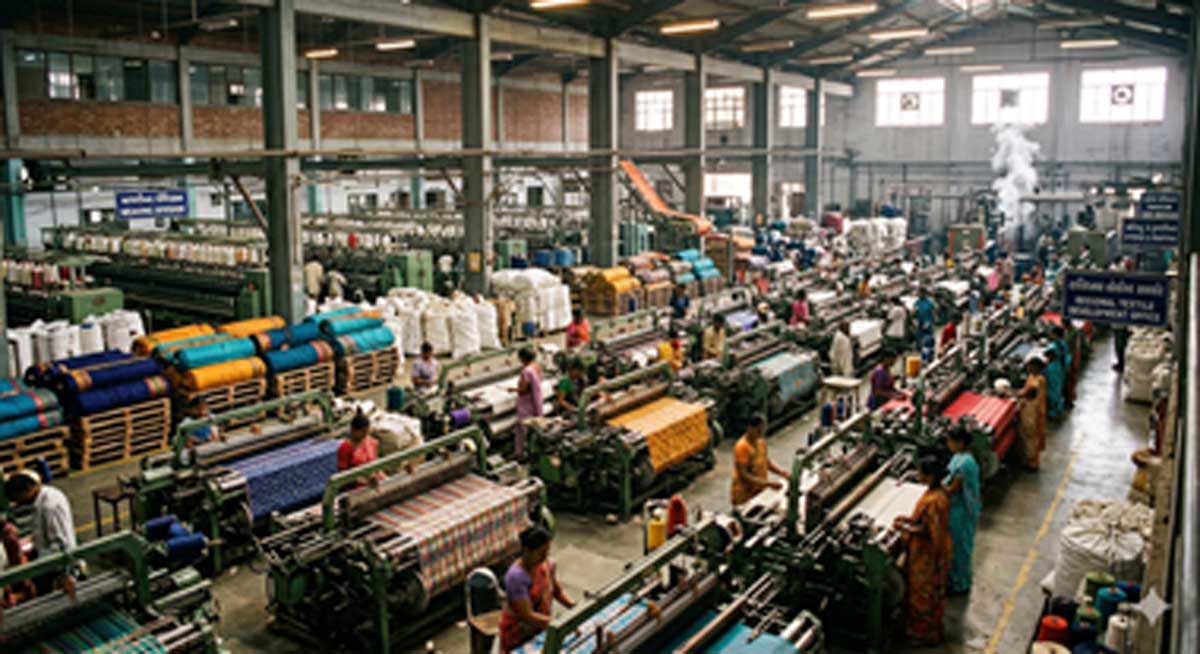
Caption for the image: India generates approximately 70.73 lakh tonnes of textile waste annually, of which over 70 per cent is recovered and routed into reuse, recycling, and other circular processes.
As global demand patterns evolve, the focus is shifting towards man-made fibres (MMF) and blended textiles. This transition is critical, given that MMF accounts for a significant share of global textile trade.
Regional hubs are adapting to this shift by investing in advanced manufacturing technologies and expanding capabilities in MMF-based and value-added products. The Production Linked Incentive (PLI) scheme has accelerated this transition by encouraging investments in high-value textile segments, including technical textiles and MMF apparel.
At the same time, there is a growing emphasis on product differentiation. Export markets are increasingly driven by performance, functionality, and specialised applications rather than commoditised offerings. This is pushing manufacturers within these clusters to move up the value chain, focusing on engineered fabrics, blended materials, and innovative textile solutions.
Segments such as denim further highlight how regional hubs are evolving beyond scale to innovation-led manufacturing. India is one of the world’s leading producers of denim fabric, with strong cluster-based ecosystems supporting large-scale production as well as value-added processes such as finishing, washing, and sustainable treatment technologies. These capabilities are enabling Indian manufacturers to cater to both global fashion demand and performance-driven applications.
This shift from volume-led to value-led production is essential for sustaining export growth and improving margins in a highly competitive global environment.
Sustainability as a competitive advantage
With India being the third-largest textile manufacturing hub, sustainability is no longer optional; it has become a global mandate. India generates approximately 70.73 lakh tonnes of textile waste annually, of which over 70 per cent is recovered and routed into reuse, recycling, and other circular processes, highlighting the growing importance of circularity in the textile sector.
As the industry transitions towards more responsible practices and addresses challenges such as high water consumption, chemical usage, and wastewater generation, regional hubs are uniquely positioned to drive this shift at scale. Cluster-level ecosystems further strengthen this transition, with certain segments such as spinning already achieving near 100 per cent in-situ reintegration of waste, setting benchmarks for circular production.
By adopting water-efficient dyeing technologies, renewable energy sources, and circular production practices, clusters are increasingly integrating sustainable solutions into their operations. The cluster-based model allows for shared infrastructure such as effluent treatment plants, water recycling systems, and renewable energy integration, making sustainability more scalable and cost-effective.
This not only reduces environmental impact but also ensures compliance with global standards, which is becoming a prerequisite for accessing key export markets. Sustainability is increasingly influencing decisions, making it a critical factor in global sourcing strategies.
Technology, innovation, and skill development
The next phase of growth for regional manufacturing hubs will be driven by technology adoption and skill development.
Digital tools such as AI-driven demand forecasting, automation, and virtual prototyping are improving efficiency, reducing waste, and accelerating product development cycles. These technologies enable manufacturers to respond more quickly to changing global trends and customer expectations.
At the same time, investments in skill development are essential to building a future-ready workforce. Training in advanced manufacturing, sustainability practices, and digital tools is helping strengthen industry capabilities.
Innovation is also being supported through collaboration between industry, academia, and research institutions, particularly in areas such as technical textiles, advanced materials, and sustainable production processes.
Strengthening regional ecosystems through policy support
Government initiatives continue to play a pivotal role in strengthening regional manufacturing hubs. Policies focused on modernisation, exports, and sustainability are creating a supportive environment for industry growth.
Schemes such as the PLI are encouraging investments in high-value textile segments, while PM MITRA parks aim to create integrated manufacturing ecosystems with world-class infrastructure and connectivity. These parks are designed to integrate the entire textile value chain within a single ecosystem, significantly improving efficiency, reducing logistics costs, and enhancing export competitiveness.
Efforts to improve ease of doing business, enhance logistics, and expand trade agreements are further enhancing India’s position in global textile markets. The effectiveness of these initiatives will depend on how well they are implemented at the cluster level, ensuring benefits reach both large enterprises and MSMEs.
Way forward
With strong policy support already in place, the next phase of growth will depend on how effectively the industry strengthens these regional ecosystems.
The focus must be on deeper value chain integration, infrastructure development, and faster adoption of sustainable and digital practices. Strengthening linkages between clusters, improving last-mile connectivity, and expanding global market access will be key priorities going forward.
Conclusion
To build a strong and efficient ecosystem, India’s textile export sector must not only scale but also become more efficient, agile, and future-ready. Regional manufacturing hubs remain at the centre of this transformation.
As India moves towards its ambition of becoming a global textile powerhouse, these hubs will play a defining role in shaping the country’s export trajectory by driving innovation, enabling sustainability, and positioning India as a trusted partner in the global textile ecosystem.
About the author
Suketu Shah has been appointed as the Chief Executive Officer (CEO) of Vishal Fabrics. Shah holds a Bachelor of Science (BSc) degree and a Diploma in Textile Chemistry (DTC) from M.S. University, Vadodara, where he was awarded the prestigious Gold Medal for academic excellence.With over 40 years of experience in the textile industry, Shah has been instrumental in driving growth and innovation across several leading companies. His extensive career includes leadership roles at LNJ Denim – RSWM Group, Mafatlal Industries, Aarvee Denims C Exports, APAC Inti Corpora Bawen (Indonesia), Raymond UCO Denim, Modern Denim, and Arvind.
The post The role of regional manufacturing hubs in scaling exports appeared first on Indian Textile Journal.