

Chris Evans & PK Singh: Luwa’s air engineering optimises textile production

As textile mills worldwide face mounting pressure to improve energy efficiency, ensure consistent product quality, and meet stricter sustainability targets, advanced air engineering is becoming a critical enabler of modern manufacturing. In this interaction, Chris Evans (CE), Managing Director, Luwa West, and PK Singh (PKS), Managing Director, Luwa East, share how integrated solutions for climate control, filtration, waste extraction and digital monitoring are helping textile producers achieve cleaner operations and measurable cost savings.
How is Luwa Group serving the global textile industry?
CE: To produce top quality textile products, our customers require optimal climate conditions for their process. With our Swiss heritage and global presence, we combine long-standing textile expertise with the ability to support customers across key textile markets worldwide. We design, manufacture and install these systems allowing efficient operation, sustainably improving manufacturing conditions and of course reducing their energy costs.
We have been engineering the air systems that textile production depends on for the past 90 years. At Luwa, we provide integrated solutions for climate control, air handling, filtration, waste extraction, and latest in digital control that help mills create stable production conditions, protect product quality, improve machine performance, and run cleaner, more reliable operations.
As an expert of textile air engineering, how is Luwa helping its customers increase efficiency, reduce energy consumption, and achieve more sustainable production processes?
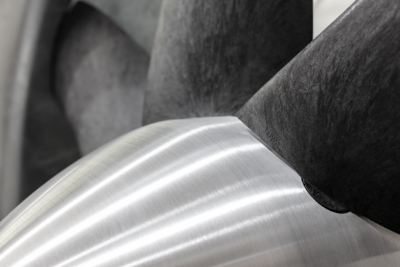
Luwa B800CF Axial Flow Fan with Carbon Fiber Blades for energy-efficient textile air engineering.
CE: One key expertise we offer is to optimise the entire air engineering system of our customer’s processes rather than looking at individual components in isolation. In textile production, air is a critical process factor that directly affects fibre behaviour, machine performance, cleanliness, and energy consumption. By combining precise humidity and temperature control, efficient airflow design, advanced filtration, and digital control, we help mills improve process stability, reduce waste, lower operating costs, and operate more sustainably.
A strong example is our state of the art B800CF Axial Flow Fan with Carbon Fiber Blades. In many textile mills, air systems are among the largest consumers of electricity, so improving fan efficiency can have a major effect on total mill performance. The B800CF was developed to deliver the required air volume with less energy, while also offering lower weight, improved aerodynamic performance, and lower noise levels compared with conventional designs.
The impact becomes even clearer at scale. With 1,000 B800CF fans sold and in operation, an important milestone for us and a strong validation of the value this technology delivers, the cumulative effect is highly significant: around 41.6 GWh of electricity saved annually, approximately 14,700 tonnes of CO₂ avoided per year, and about 5.2 MW lower power demand across the installed base. For us, this shows that sustainability in textile production is not only driven by major transformation projects, but also by practical engineering decisions at equipment level that improve efficiency machine by machine, system by system, and mill by mill.
That is how we approach sustainability at Luwa: not as a single feature, but as the result of better-engineered air systems that help customers achieve stable production, lower energy consumption, and measurable environmental improvements.
How do you assess the current global textile machinery market? What key factors are shaping demand for advanced textile machinery?
CE: Like many industries, our global textile machinery market is also undergoing significant transformation. One of the most notable trends is the growing focus on higher efficiency, automation, and sustainability across textile production. Competition in the industry remains tough due to a level of overcapacity in the industry following the boom in new plant manufacture in recent years. As a result, textile manufacturers are investing in technologies that improve operational efficiency while supporting sustainability goals.
An essential part of this is the need to embrace automation and digital monitoring, which allows mills to improve production control and operational transparency. Manufacturers are seeking systems that require less manual intervention while delivering consistent performance over long production cycles.
Another key factor is the rising use of recycled and man-made fibres. These materials often generate more dust and short fibre fragments during processing, which increases the demand for advanced air filtration and waste management systems.
At the same time, global textile production is becoming more geographically diversified. While China remains the largest and most technologically advanced textile manufacturing market, countries such as India, Indonesia and Vietnam are expanding rapidly. This creates new opportunities for engineering solutions that support efficient and reliable production.
What major technological or operational trends do you believe will shape the global T&A industry over the next decade? How is your company preparing for these trends?
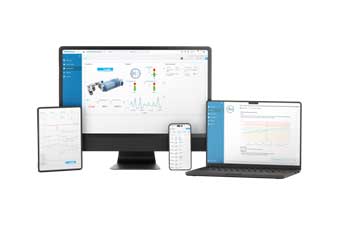
Luwa DigiControl 7 for real-time digital monitoring and precise climate control in textile mills.
CE: The textile and apparel industry is entering a period of rapid transformation driven by technology, sustainability goals, and evolving production requirements.
Resource-efficient manufacturing is becoming a central factor in investment decisions. Producers are increasingly focused on reducing energy consumption and minimising waste. At the same time, the industry is gradually moving toward more circular production models where fibre waste and byproducts are recovered and reused. Efficient air filtration and waste handling systems play a vital role in supporting these initiatives.
Luwa is noted for quality and especially being an industry leader in innovation. Following on from our success with our B800CF Axial Flow Fan with Carbon Fiber Blades we continue to invest in advanced filtration technologies, energy-efficient system design, and digital monitoring platforms that help textile manufacturers optimise production while maintaining high environmental and quality standards.
We will continue to lunch new innovations for our customers. One example is with the growing adoption of digital monitoring and automation we will be bringing further development of Luwa´s DigiControl 7 to provide more precise control of production environments and support for predictive maintenance strategies for both existing and new installations, allowing manufacturers to monitor system performance in real time and optimise operations.
How significant is the Indian market for your company? What new opportunities does India offer to you?
PKS: India is one of the most important markets for Luwa. Our relationship with the Indian textile industry spans more than three decades, and we view the country as a long-term strategic partner.
India offers a unique combination of scale, a skilled workforce, and steadily advancing technological capability. Government initiatives such as the PM MITRA scheme are encouraging the development of integrated textile parks, creating opportunities to implement advanced air engineering solutions on a large scale. In addition, recent Free Trade Agreements are strengthening India’s position as a global textile manufacturing and export hub, opening new opportunities for companies operating in the sector.
The Government of India aims to strengthen the technical textiles and man-made fibre (MMF) value chain. How can your company contribute to achieving this goal?
PKS: Technical textiles represent one of the fastest growing segments of the global textile industry. Applications such as medical fabrics, filtration materials, and industrial textiles require carefully controlled production environments.
Manufacturing processes for man-made fibres require tightly controlled environmental parameters. Temperature and humidity must remain within narrow ranges to ensure consistent fibre properties and stable machine performance.
Luwa’s air engineering systems provide this level of control through engineered air handling, filtration, and airflow management solutions. In addition, synthetic fibre production can generate specialised dust particles and process emissions. Our filtration technologies capture these contaminants at the source, helping protect sensitive equipment while improving workplace air quality.
As India expands its technical textiles ecosystem, advanced air engineering will play a key role in supporting production reliability, quality consistency, and energy-efficient operations across this high-value segment.
Trade agreement between India and European Free Trade Association (of which Switzerland is a member) came into effect on October 1, 2025. How do you see this development helping collaboration between Swiss technology providers and India’s textile sector?
PKS: The India–EFTA Trade and Economic Partnership Agreement represent a crucial step in strengthening industrial cooperation between India and the European Free Trade Association countries. By reducing trade barriers and encouraging investment, the agreement creates a favourable environment for long-term partnerships and technology exchange.
For Swiss technology providers such as Luwa, this framework enables closer collaboration with Indian manufacturers, engineering firms, and research institutions. It also supports the transfer of advanced engineering solutions that can accelerate modernisation within India’s textile sector.
Swiss companies have long been associated with precision engineering and process optimisation. Greater access to these technologies can help the Indian textile industry upgrade production facilities, improve operational efficiency, and strengthen global competitiveness.
Overall, the agreement supports a stronger flow of innovation and engineering knowledge between Swiss research centres and Indian manufacturing operations.
What is the outlook for your company in 2026? What are your growth plans for India
PKS: The outlook for 2026 is positive as textile manufacturers continue to focus on modernisation and sustainable production. For Luwa, India remains a strategic growth market.
We plan to further strengthen our local engineering, project execution, and service capabilities while supporting manufacturers in implementing advanced air engineering solutions.
By combining our Swiss engineering heritage with strong local expertise in Bengaluru, we are well positioned to support the next phase of growth and technological advancement in the Indian textile industry.
The post Chris Evans & PK Singh: Luwa’s air engineering optimises textile production appeared first on Indian Textile Journal.