
MAE: We see ourselves as part of the broader Italian engineering tradition
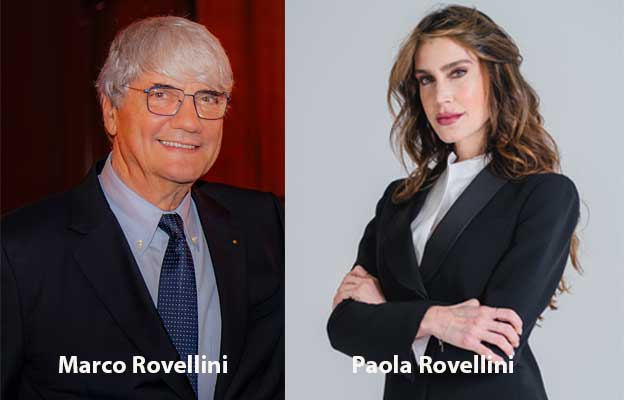
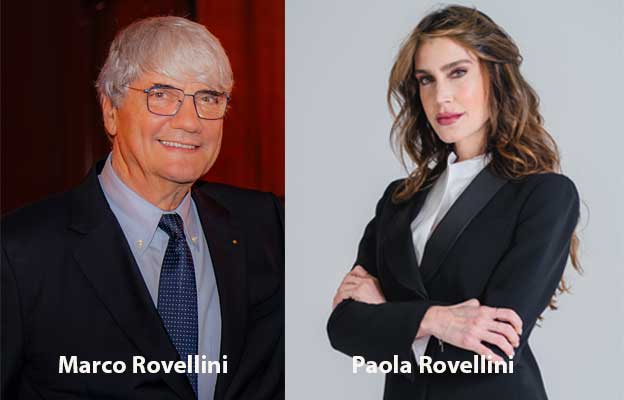
MAE has built its reputation on Italy’s legacy of precision engineering, delivering advanced solutions for synthetic fibre and carbon fibre manufacturing worldwide. In this interview, Marco Rovellini, Chairman, and Paola Rovellini, Chief Finance Officer, MAE, discuss the company’s technological strengths, its vision for advanced materials, and the growing relevance of carbon fibre. They also share how MAE Future India aims to support India’s evolving ambitions in high-value fibre production.
MAE represents a long-standing Italian tradition in engineering. Could you introduce the company and its core competencies?
MAE is an Italian engineering and technology company with a strong background in advanced fibre production processes. Our expertise covers areas such as synthetic Wet/Air spinning, PAN precursor technologies, and carbon fibre production.
What defines our approach is the integration of process know-how with engineering execution. Over the years, we have been involved in a range of complex industrial projects globally including in China , supporting clients across different stages—from process design to commissioning and optimization.
We see ourselves as part of the broader Italian engineering tradition, where attention to detail, process understanding, and long-term reliability are key elements.
How do you see the role of Italian engineering in the global textile and fiber industry today?
Italian engineering has always been associated with quality, flexibility, and strong process knowledge. In the fibre and textile sectors, this translates into the ability to handle complex and evolving technologies.
Today, the industry is moving toward more advanced materials and more integrated processes. In this context, engineering companies need to combine innovation with industrial robustness.
Italian companies can contribute significantly in this area, especially when working in close collaboration with international partners.
India is increasingly focusing on value-added fibers and advanced materials. What is your perspective on this transition?
India is clearly progressing toward higher-value segments. We see increasing interest in specialty fibres, technical textiles, and materials that go beyond traditional applications. India’s focus on self-reliance in energy by maximizing Non petroleum based New Age Energy will demand more of such advanced materials . Self-reliance can only be achieved by increasing local production of such materials in India. MAE offers complete solutions in Carbon Fiber manufacturing and specializes in its precursors.
This transition is supported by a strong industrial base and growing technical capabilities. At the same time, projects in these areas tend to be more complex and require careful process integration from the early stages.
We believe that combining local strengths with international experience can accelerate this development in a very effective way.
MAE has expressed interest in strengthening its presence in India. Could you elaborate on this direction?
India is a natural area of focus for us, considering both the scale of the market and its long-term potential.
We are already in dialogue with several stakeholders and observing a growing number of structured initiatives, particularly in advanced and other new age fibre manufacturing.
Our intention is to gradually reinforce our Indian presence through what we refer to as MAE Future India —an initiative aimed at supporting new initiative and over the time helping being closer to projects during their execution phases, including installation, commissioning, and technical services. It is not just a commercial presence—it is a strategic platform for future development. Our vision is to progressively strengthen our proximity to the market and to ongoing projects.
MAE s.p.a already has fully functional base in USA and China – so with MAE Future India , now we have presence in major geographies in the world .
The approach is intentionally flexible, allowing us to adapt to the specific needs of each project and partner.
How does MAE approach collaboration with Indian companies and engineering partners?
Collaboration is essential. We do not see our role as replacing local capabilities, but rather as complementing them where specific expertise is required.
India has a well-developed ecosystem of engineering companies and industrial players. In our experience, the most successful projects are those where local and international competencies are effectively combined.
We are therefore open to different forms of collaboration, depending on the project structure and objectives.
Advanced materials such as carbon fiber are gaining strategic importance. Do you see concrete opportunities in India
Yes, the interest is clearly visible. Carbon fibre and related materials are becoming relevant for a number of sectors, including infrastructure, mobility, energy, and defence.
India is developing ambitions in these areas. The ecosystem for composite manufacturing and capabilities have grown tremendously in last few years leading to rising appetite for advanced materials like Carbon fiber which is currently solely imported .with rising geopolitical stress recently , self-reliance in such fields are being pursued globally by many countries including India .
However, these processes require a high level of control and consistency. Supporting reliable scale-up from concept to industrial production is a key factor, and this is where experienced engineering partners like us can add value by offering from Lab scale to Pilot size and subsequently commercializing efficiently.
Sustainability is a key focus area globally. How is it reflected in your engineering approach?
Sustainability is closely linked to efficiency and process optimization. Many improvements—such as better energy integration, enhanced solvent recovery, and reduced waste—are both environmentally and economically beneficial.
Besides our experience in 2nd generation biofules and biochemical equipment, we are also monitoring developments in bio-based materials and alternative process routes, which may play an increasing role in the future of the industry.
What message would you like to share with Indian stakeholders looking at future fiber investments?
India is entering a phase where more complex and ambitious projects are being evaluated.
In this context, early technical decisions and project closure become very important for long-term economics, performance and reliability. Having access to the right combination of local expertise and international experience can make a significant difference.
We see ourselves as a partner ready to engage in this process—bringing a collaborative approach and experience across different technologies, while adapting to the specific needs of the Indian market.
The post MAE: We see ourselves as part of the broader Italian engineering tradition appeared first on Indian Textile Journal.