
Rolls-Royce Project Nightingale Ushers In A New Era of Coachbuilt Luxury
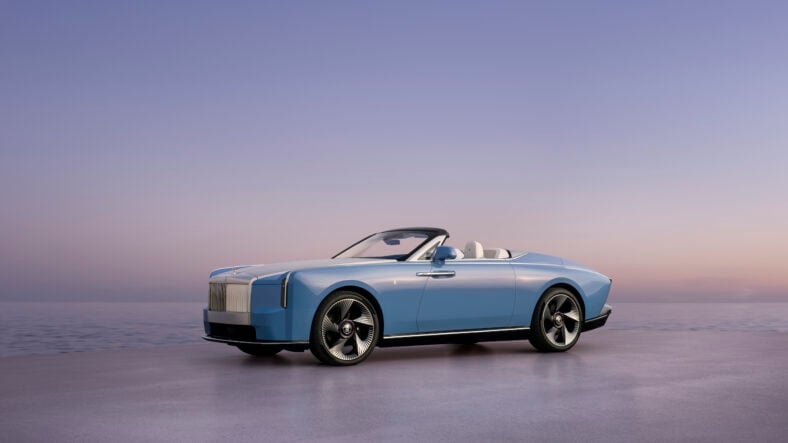
Today Rolls Royce pulls back the silk sheets on its latest glittering totem for the Gulfstream G800 set: the romantically styled Project Nightingale. Named after Le Rossignol (French for “nightingale”)—the residence where Henry Royce housed his designers and engineers a century ago near his fabled Côte d’Azur winter manse (itself dubbed La Mimosa)—the open-air behemoth marks the inaugural vehicle from Rolls-Royce’s recently announced Coachbuild Collection. The new, invitation-only program offers the world’s most design-obsessed collectors something the super-luxury world has rarely seen: a limited-edition, stand-alone Rolls-Royce model that built in highly limited numbers—in Project Nightingale’s case, just 100.
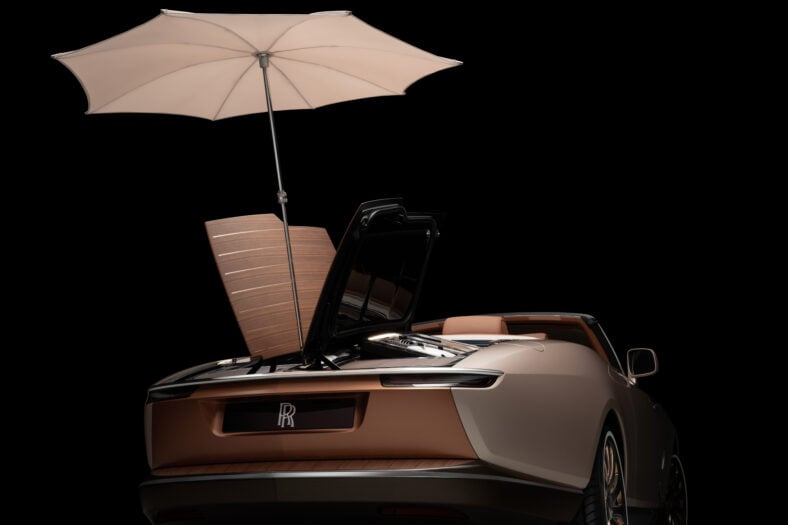
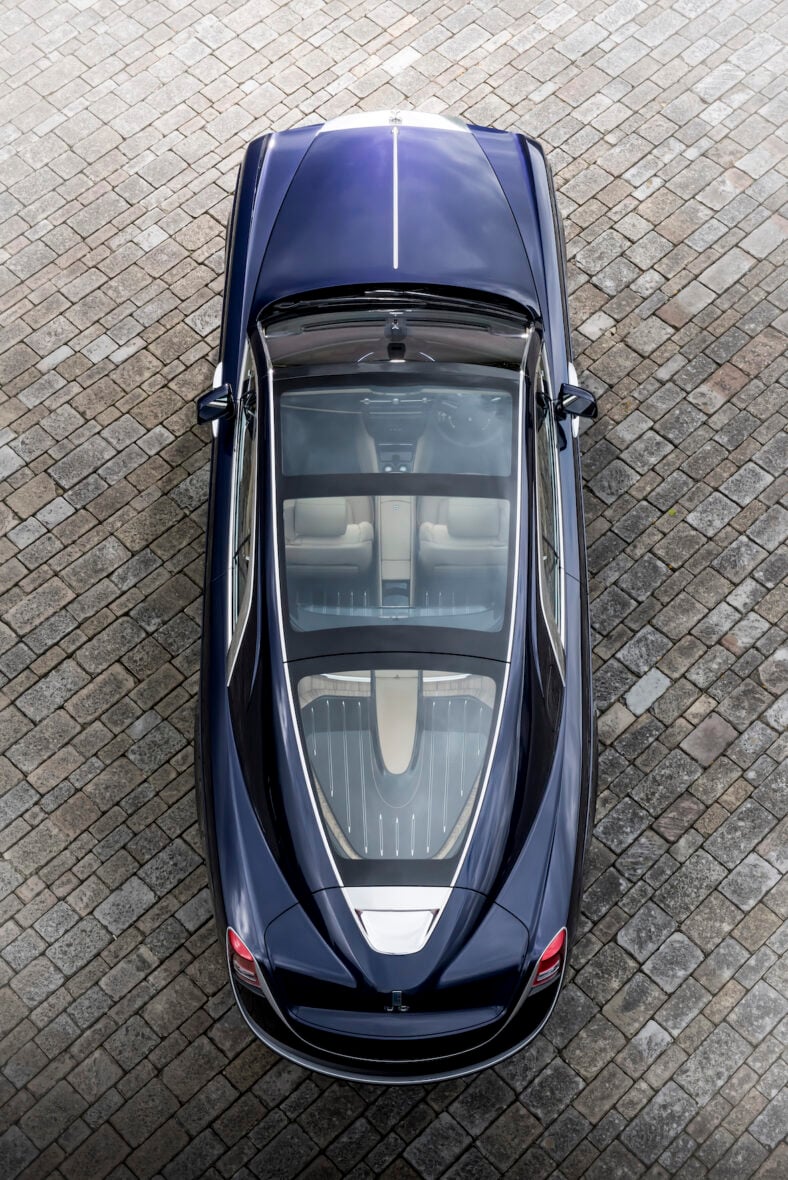
It’s not a bespoke variant of an existing model, nor one of those marquee one-off commissions shaped entirely by a billionaire’s outlandish whims. Instead it lies somewhere in between: a wholly original motor car conceived, authored, and executed by Rolls-Royce’s Coachbuild division. Launched in 2017, Coachbuild is responsible for such famed unicorns as the Sweptail, a two-seater featuring an immense, uninterrupted panoramic glass roof and yacht-inspired polished wood rear shelf. Coachbuild perhaps peaked with the Boat Tail, a trio of open-air coupés featuring removable roofs and dramatic picnic-ready trunks (with foldout table and sun umbrella). The azure-hued sister of the triplets, colloquially known as “The Jay-Z Rolls” due to the car’s (alleged) owner, even featured a double refrigerator specifically crafted for Armand de Brignac champagne, which it can quickly chill to precisely 43 degrees Fahrenheit—the ideal temperature of the client’s preferred vintage.
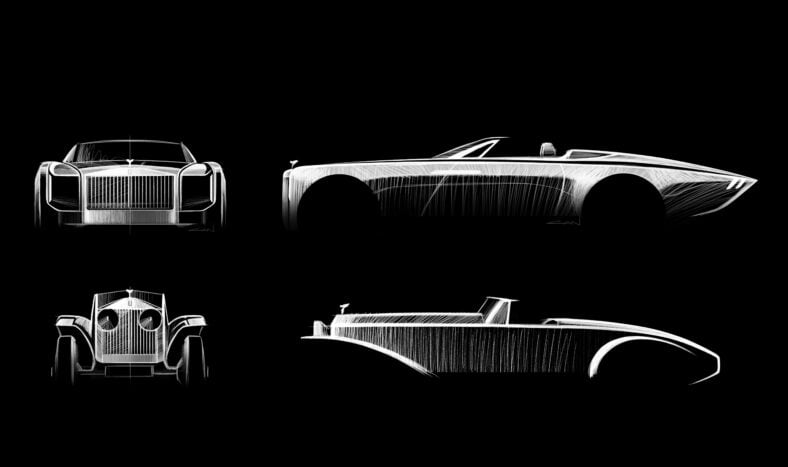
The Coachbuild Collection’s inaugural offering, Project Nightingale, draws its visual DNA from the high-speed experimental “EX” models Royce and his engineers built in 1928. Two prototypes in particular, the 16EX and 17EX, saw lightweight aluminum bodies draped over powerful Phantom chassis, achieving a then-remarkable top speed of more than 90 mph. Their torpedo-shaped forms captured the bravado of the era: long bonnets, shallow windshields, snug enveloping cabins set deep within the body. These gargantuan, opulent Jazz Age vessels gloriously manifested the Roaring Twenties in four-wheeled Art Deco form.
Project Nightingale channels three design principles directly distilled from these ancestors: “Upright to Flowing,” describing the Pantheon Grille’s commanding vertical gesture transitioning into a graceful rear; “Central Fuselage,” a single unbroken hull line running the full length of the car; and “Flying Wings,” sculptural volumes that create tension across the body and draw the eye toward the rear. Project Nightingale pays its respects by donning red badges like those its ancestors wore.
The new invitation-only Coachbuild Collection program offers the world’s most design obsessed collectors something the super-luxury world has rarely seen.
Measuring a colossal 18.9 feet in length, designers composed Project Nightingale almost entirely of hood and tail, with a compact, intimate cabin sandwiched in between as a quietly powerful counterpoint. Speaking of quiet, the Project Nightingale utilizes a fully electric drivetrain—not the one found in the Spectre, but the next iteration of the Rolls-Royce Electric architecture rumored (quite logically) to be the same BEV powertrain on the SUV that’s recently been captured in spy shots. For now, Rolls-Royce is keeping specs and performance figures under wraps.
Rolls-Royce promises Project Nightingale’s fully electric soul is not incidental, nor a compromise to forced sustainability; the powertrain is fundamental to the car’s character. Acoustic engineers liken driving early prototypes with the roof lowered to traveling by sailing yacht: virtually no mechanical commotion to disturb passengers, wind noise all but eliminated. As Rolls notes: “What remains is the world itself: the sound of ocean waves breaking on the shore, the movement of air through trees, the silence of open countryside at speed, the chorus of birdsong.”

The fully electric drivetrain also offers other spatial benefits, transforming the front elevation completely. With no requirement for large cooling intakes, liberated designers achieved vast, uninterrupted surfaces between the wing edges and the Pantheon Grille. The nearly meter-wide surround appears carved from a single block of aluminum, 24 veins set deeply within it. Designers also subtly recessed the iconic Spirit of Ecstasy hood ornament into the bonnet’s leading edge, her lines dissolving into the metalwork as though she’s piercing through water at speed. They developed a color unique to the Project Nightingale, a mesmerizing pastel blue sprinkled with red crystal. Of course the lucky 100 owners can choose any color they want, but this hue will never be found on any other Rolls.
Tapping the marque’s storied nautical heritage, the profile reveals a single hull line running uninterrupted from front to rear, inspired by the line separating a yacht’s hull from its superstructure. The 24-inch wheels—the largest ever fitted to a Rolls-Royce—feature a directional design drawn from yacht propellers viewed from beneath the waterline: forms that appear to be in continuous motion even at rest. At the rear, twin lamp clusters fall from upper surface to lower at a near-perfect right angle, while the Piano Boot opens sideways on a cantilever, transforming the functional act of opening a boot into something a bit more theatrical. This visual weight can be credited to the vehicle’s eye-popping length, almost as big as Rolls-Royce’s flagship Phantom, yet devoted entirely to a two-seat convertible form. How very indulgent.

Entry into Project Nightingale is strictly by invitation, offered through Rolls-Royce’s global Private Office network in Goodwood, Dubai, Seoul, Shanghai, and New York. Each of the 100 examples will be individually curated with its client down to the tiniest detail. Not only is the exterior blue exclusive to this Coachbuild Collection but also the material palette developed for Project Nightingale. While pricing hasn’t been officially announced, reports have it pegged around $4-5 million—considerably less than the aforementioned Boat Tail’s alleged $30 million price tag while significantly more than the Phantom’s $600,000. Overall the British marque insists the experience is inseparable from the object: clients are already participating in a multi-year program of private gatherings, design studio visits, and curated events in the world’s most desirable destinations, watching their motor car slowly come to life in real time.
Follow Deputy Editor Nicolas Stecher’s travel, spirits and automotive adventures on Instagram at @nickstecher and @boozeoftheday.